
Precision Investment Casting Manufacturer in China
China United Mould supplies lost-wax investment castings in stainless, carbon and alloy steel, as-cast or heat treated and machined to your drawing. Send the drawing, alloy grade and annual volume for a castability review and quotation.
- Silica sol or water glass route, recommended per part
- Wax pattern dies from our own tool room
- ISO 9001 quality management system
The investment casting process in eight steps
Wax pattern injection
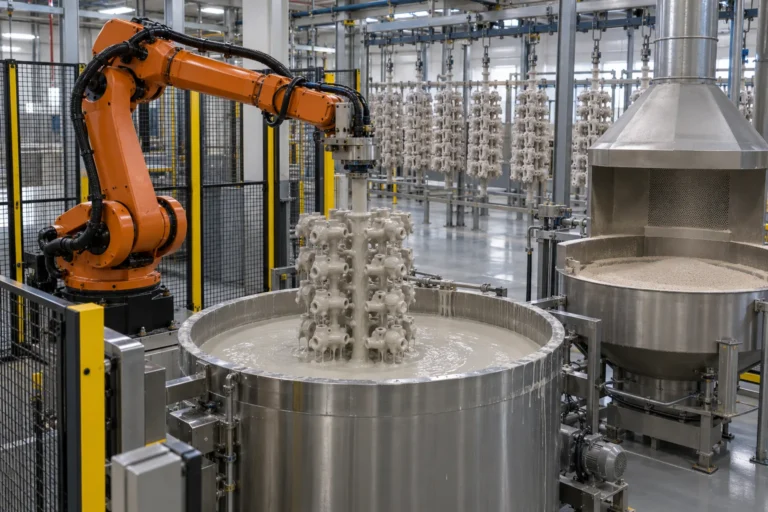
Ceramic shell building
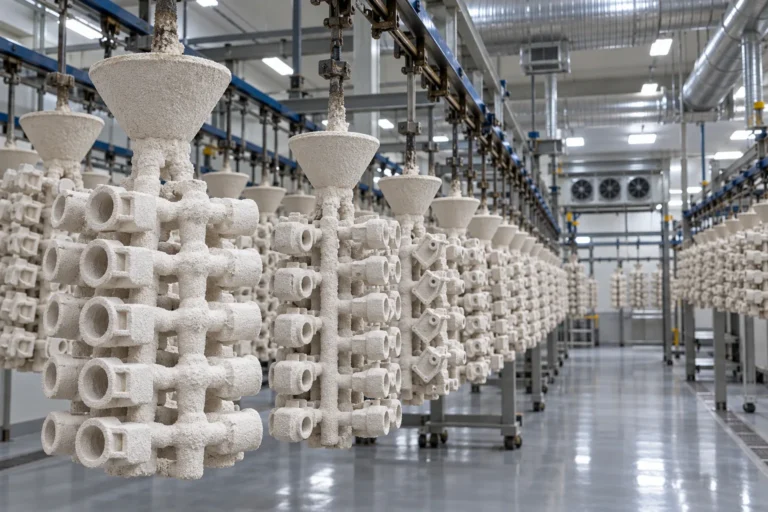
Ceramic shells drying
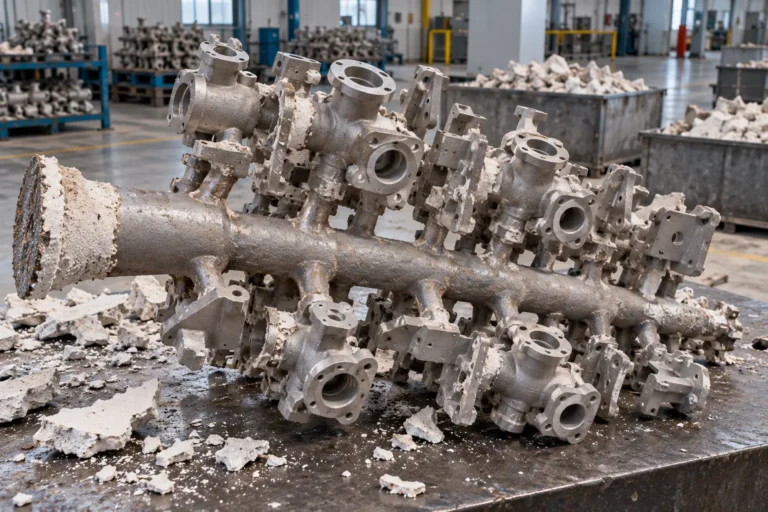
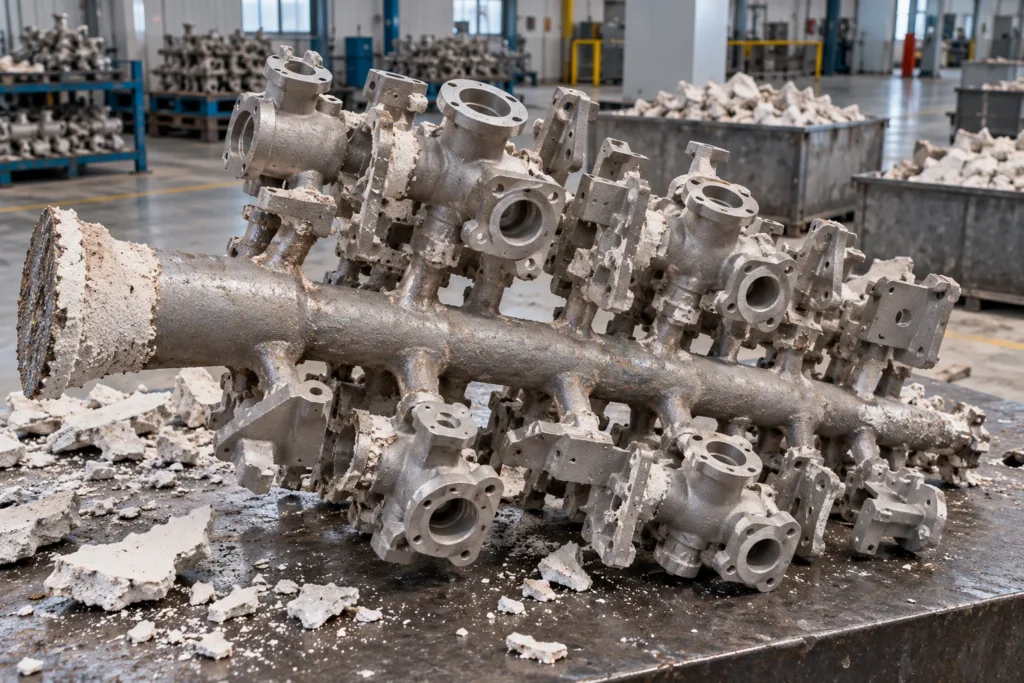
Castings after shell knockout- 1
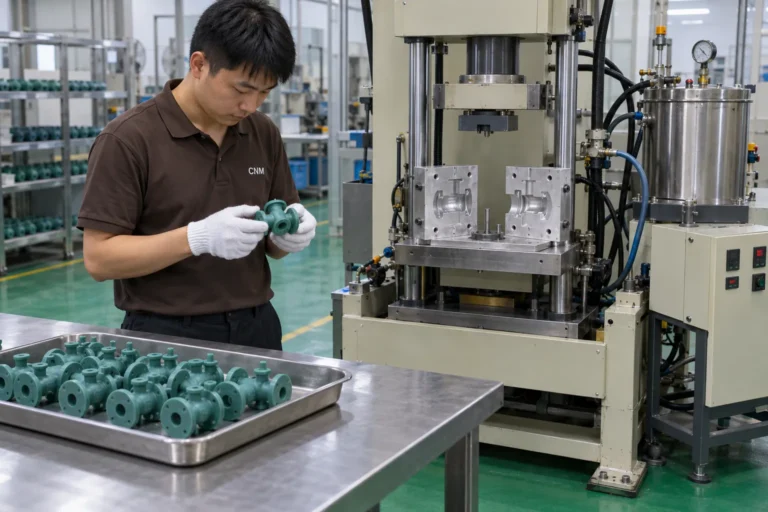
Wax injection
Pattern wax is injected into an aluminum die.
- 2
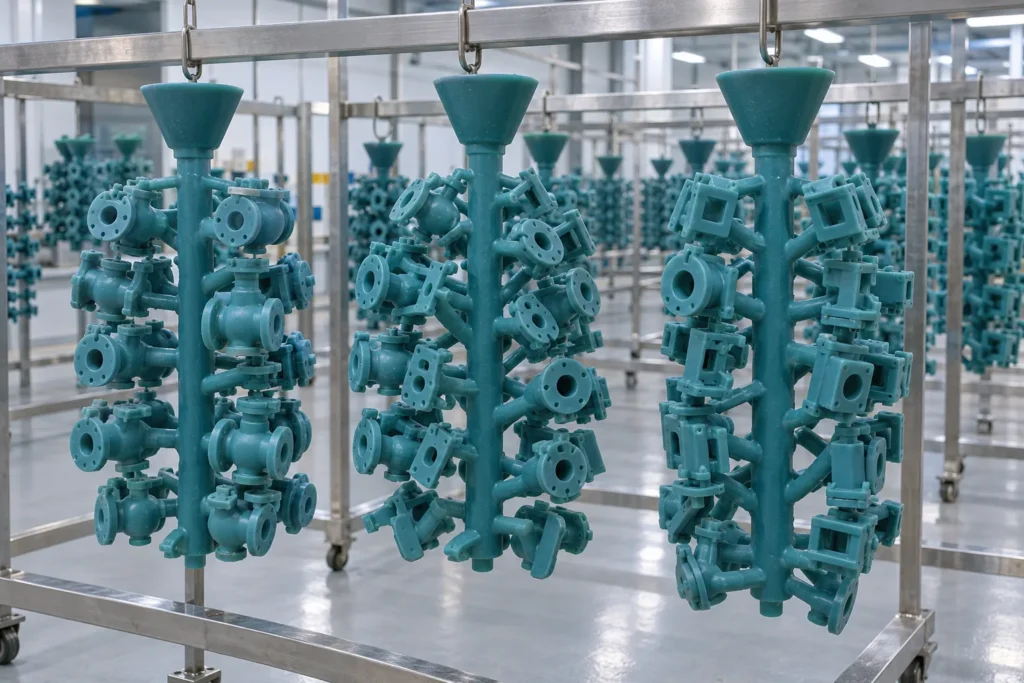
Tree assembly
Patterns are welded by their gates to a wax sprue.
- 3
Shell building
Slurry dip and sand stucco, typically 5–7 coats for silica sol.
- 4
Dewaxing
Steam autoclave (silica sol) or hot water (water glass).
- 5
Firing
Typically 850–1,100 °C, depending on the shell.
- 6
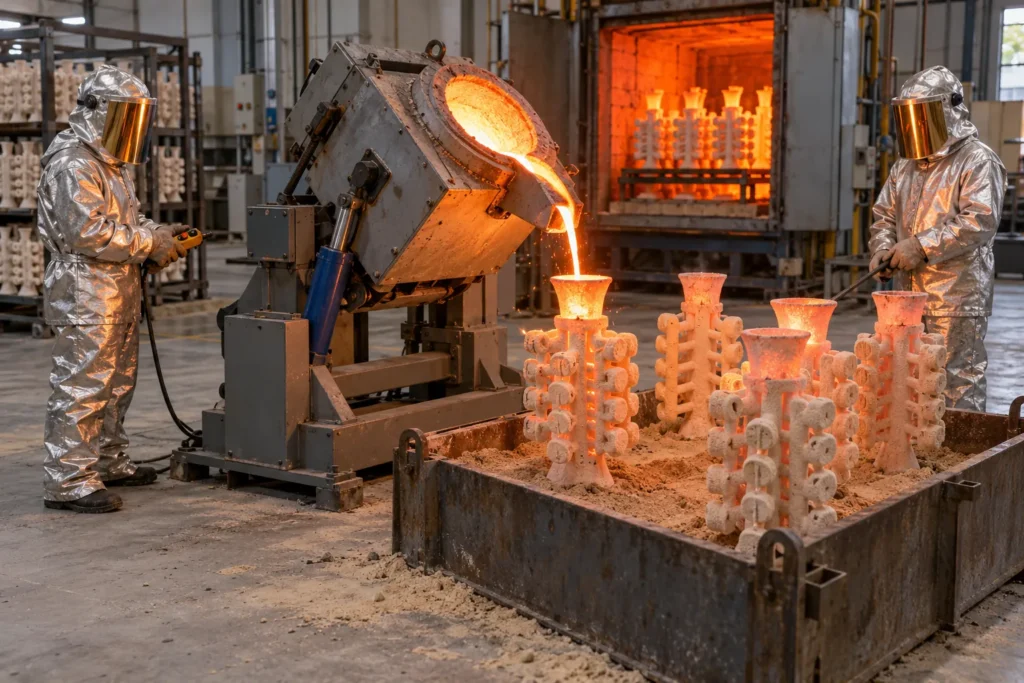
Pouring
Induction-melted steel is poured into the hot shell.
- 7
Knockout & cut-off
Shell knocked off, castings cut from the sprue.
- 8
Finishing & inspection
Gate grinding, blasting, heat treatment, machining, inspection.
Castings, wax dies and machining
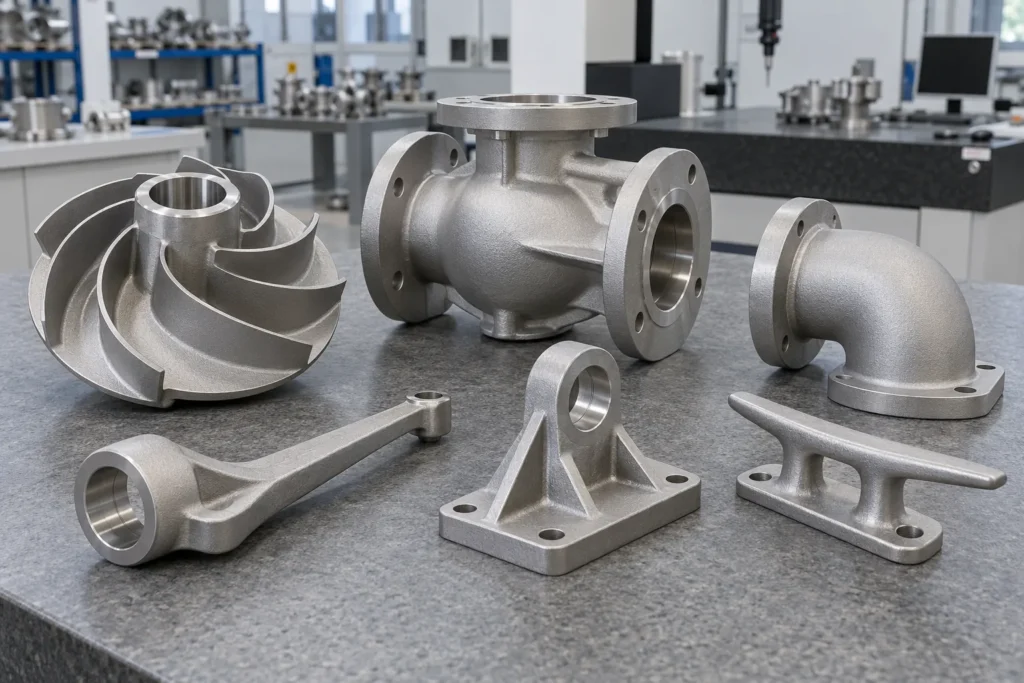
We supply investment castings as-cast or heat treated, machined and finished to your drawing. The wax pattern dies are made in our own tool room.
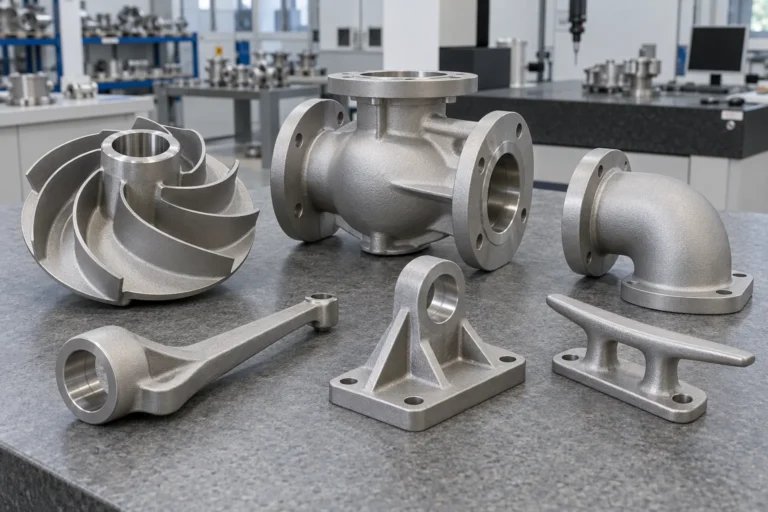
Stainless Steel Investment Casting
304, 316, 17-4PH, duplex and martensitic stainless steel castings.
Learn more
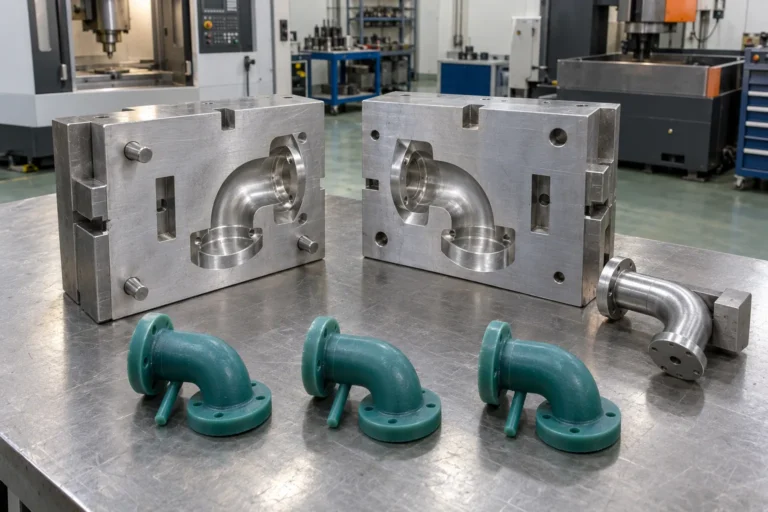
Wax Pattern Tooling
Aluminum and steel wax injection dies made in our own tool room.
Learn more
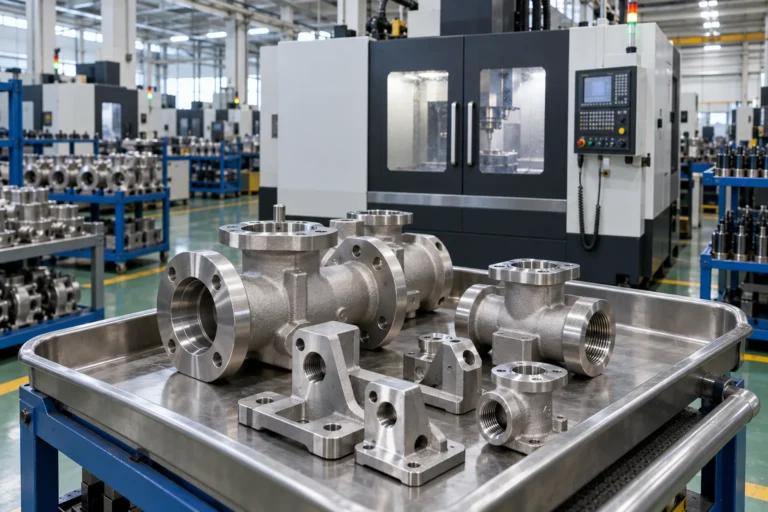
Machining & Finishing of Castings
CNC machining, heat treatment and surface finishing of investment castings to your drawing.
Learn moreCommon investment casting alloys
Typical uses shown. The grade and standard on your drawing govern chemistry and properties.
General corrosion resistance: food equipment, hardware, fittings
Chlorides and chemicals: marine, pump and valve parts
High strength with corrosion resistance
Seawater and chloride service
Machinery parts, levers, brackets
Heat-treated strength and wear parts
Hardenable wear and cutting parts
Wear-resistant and tooling components
Silica sol or water glass?
Both are lost-wax processes; the shell binder changes the surface, the accuracy and the cost. Silica sol shells have zircon face coats and are dried for hours per coat. They give the better surface and tolerances and are used for stainless and precision parts. Water glass shells are chemically hardened and built in about a day. They cost less and suit carbon and low-alloy steel parts that are machined on their functional faces. Where either route could work, we quote both and recommend one.
Silica sol castingWater glass casting| Silica sol | Water glass | |
|---|---|---|
| Surface (as-cast) | Ra 3.2–6.3 µm | Ra 6.3–12.5 µm |
| Tolerance | DCTG 4–6 | DCTG 7–9 |
| Shell firing | 1,000–1,100 °C | 850–950 °C |
| Typical alloys | Stainless, alloy steels | Carbon, low-alloy steels |
| Cost | Higher | Lower |
Typical values. Tolerance grades per ISO 8062-3; confirmed for each part.
Where investment castings are used
Pumps & valves
Impellers, casings, valve bodies, discs
Fluid & pipe systems
Fittings, flanges, couplings
Food machinery
Hygienic stainless parts
Medical & lab
Instrument and equipment parts
Marine hardware
Fittings and deck hardware
Hardware & tools
Levers, handles, locks
Automotive
Brackets, levers, small components
Machinery
Agricultural and construction parts
Investment casting guides

304 vs 316 vs 17-4PH Stainless Steel for Investment Castings
How 304 (CF8), 316 (CF8M) and 17-4PH (CB7Cu-1) stainless steels compare for investment castings: corrosion resistance, strength, heat…
Investment Casting Cost: What Drives the Price of a Casting
What sets the price of an investment casting: alloy, weight, yield, complexity, shell route, tooling, finishing and testing,…
Investment Casting Design Guidelines: Walls, Radii, Holes and Draft
Practical design rules for investment castings: wall thickness, uniform sections, radii, holes, draft, gating and machining allowance.
Questions we are often asked
More answers on our FAQ page, or send us your question with your drawing.
What is the difference between investment casting and die casting?
Investment casting pours metal into a one-time ceramic shell made from a wax pattern and suits steels and stainless steels; die casting injects molten aluminum, zinc or magnesium into a permanent steel die and suits high volumes of non-ferrous parts.
What is the difference between silica sol and water glass casting?
Silica sol shells give smoother surfaces and tighter tolerances and are used for stainless and precision parts. Water glass shells cost less and suit carbon and low-alloy steel parts that are machined on their functional faces. We quote both routes where either could work and recommend the one that fits the part.
What tolerances can investment casting hold?
Typically ISO 8062-3 DCTG 4–6 for silica sol castings and DCTG 7–9 for water glass, depending on size and geometry. Tighter tolerances on critical features are machined.
Which alloys can you supply?
Stainless steels (304/CF8, 316/CF8M, 17-4PH, duplex, martensitic), carbon steels and low-alloy steels are the most common. Tell us the grade and standard on your drawing and we confirm it with the quotation.
Do I need to pay for tooling?
Most castings need a wax pattern die, which is quoted separately from the piece price. For prototypes, 3D printed patterns can be cast without a die.
Send us your casting drawing
Attach the drawing and 3D model, and tell us the alloy grade, order quantity and annual volume. We review castability and reply with a quotation.